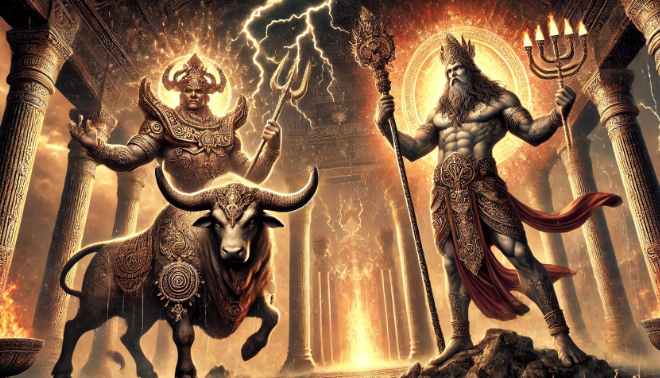
In Jonathan Cahn’s compelling book, The Return of the Gods, he explores the fascinating resurgence of ancient deities and their influence on our modern world. Cahn dives deep into how the gods (demons) of old—Baal, Molech, and Ishtar—have returned in various forms, subtly yet profoundly impacting our lives today. Understanding the connection between these ancient entities and contemporary issues offers valuable insights into the spiritual dynamics at play in our society. For an interested student of the Bible, it is intriguing to understand that the same demonic influences that shaped the world during the lives of Elijah, Elisha, David, etc continue to impact our world today. The situations we face today are more spiritual than many would like to admit.
Baal: The God of Fertility and Storms
Baal, known as the god of fertility, weather, and storms, was a major deity in the ancient Near East. Worshiping Baal involved rituals and sacrifices to ensure agricultural prosperity and favorable weather. However, Baal’s influence went beyond just the physical realm. His followers believed that he could bring success and power, often leading them to engage in morally questionable practices to gain his favor.
Cahn suggests that the spirit of Baal is alive and well in today’s society, manifesting through our relentless pursuit of materialism and the abandonment of traditional moral values. The modern-day obsession with success, wealth, and power often leads us to forsake ethical principles, mirroring the ancient practices associated with Baal worship. Cahn further elaborates that Ishtar’s influence always preceded the destruction of a society, as her worship would pave the way for Baal. By promoting sexual immorality and the breakdown of societal norms, Ishtar’s spirit would weaken the moral fabric of a culture, making it more susceptible to Baal’s corrupting influence. This sequence often led to societal decay and eventual collapse, demonstrating a clear pattern throughout history.
Molech: The God of Sacrifice
Molech, another ancient deity, is infamously associated with child sacrifice. His worshipers believed that offering their children as sacrifices would bring prosperity and favor from the god. This brutal practice represented the ultimate form of devotion, reflecting a profound level of spiritual deception and moral corruption.
Cahn draws a stark parallel between Molech and contemporary issues like abortion and the exploitation of children. He argues that the spirit of Molech is evident in the disregard for the sanctity of life and the willingness to sacrifice innocent lives for personal or societal gain. This serves as a powerful reminder of the destructive consequences of abandoning godly principles and embracing practices that devalue human life.
Ishtar: The Goddess of Love, War, and Gender Fluidity
Ishtar, the goddess of love, fertility, war, and sexuality, was a complex deity embodying both sensuality and conflict. Her worship often involved sexual rituals and acts of violence, reflecting her dual nature. Ishtar’s influence permeated various aspects of ancient society, from intimate relationships to warfare.
Cahn’s exploration of Ishtar extends to her associations with gender and sexual identity. Ishtar was known for her fluidity, often depicted as both male and female, and worship practices included androgynous priests and gender-bending rituals. This aspect of Ishtar’s worship can be seen as a precursor to contemporary discussions on gender fluidity and the LGBTQ+ movement.
According to Cahn’s book, Ishtar (Astoreth) intentionally sought to diminish the role of masculinity in men and glorify the power of women and nonbinary identities. Her worshippers dedicated a month-long series of parades and other rituals to worship Ishtar in the month we now know as June. In America, Father’s Day has been celebrated since June 19, 1910. Further, June has been recognized as Men’s Mental Health Month since 1994. Cahn argues that Ishtar aims to draw focus away from men and fathers in the family unit, using this time to parade her confusion of blurred gender identity on society in order to weaken and make it vulnerable.
Cahn posits that the spirit of Ishtar is alive in today’s culture, seen in the normalization of sexual immorality and the celebration of gender fluidity. He links the breakdown of traditional family structures, the rise of promiscuity, and the increasing visibility of LGBTQ+ identities to the ancient influence of Ishtar. The modern acceptance and promotion of diverse sexual orientations and gender identities can be seen as a reflection of Ishtar’s ancient characteristics.
Why You Should Read This Book
Jonathan Cahn’s The Return of the Gods isn’t just an exploration of ancient mythology; it’s a wake-up call to the real-life spiritual forces shaping our world today. By drawing clear connections between Baal, Molech, and Ishtar and current societal trends, Cahn highlights the timeless battle between good and evil, truth and deception. If you can understand this, you’ll begin to understand why it seems like our world has seemingly lost its mind on gender, relationships, and societal norms. Cahn’s book is one of the best I have read in decades and has a special place in my personal library.
This book challenges us to recognize and resist the influence of these ancient spirits in our lives. By returning to godly principles and embracing moral integrity, we can counteract the resurgence of these destructive forces and foster a society grounded in truth, love, and respect for all human life.
The Return of the Gods is more than a book; it’s a guide to understanding the spiritual underpinnings of our contemporary world. If you’re looking for insight into the forces at play in today’s culture and want to be equipped to navigate them, this book is a must-read. Dive into Jonathan Cahn’s profound exploration and discover how ancient deities are influencing modern society—and what you can do to stand against them.

Leave a Reply